
The Next Forty Years of Gender Equality Will Be Built Differently
04.09.26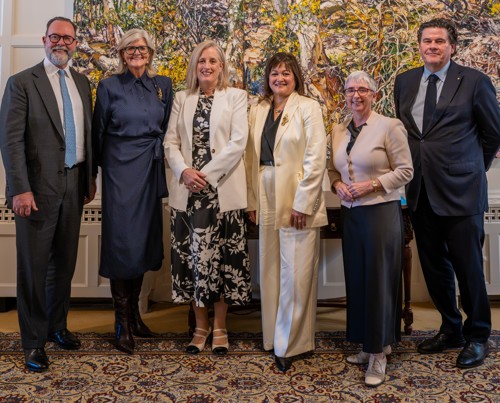
This week, I had the privilege of joining Her Excellency the Honourable Sam Mostyn AC, Governor-General of Australia, Workplace Gender Equality Agency CEO Christine Castley and government and industry leaders at Government House to mark 40 years since the Affirmative Action Act received Royal Assent under the Hawke Government.
It was an important moment to reflect on how far Australia has come on workplace gender equality, while also facing the uncomfortable truth: progress is slower than it should be.
Forty years on, gender equality remains unfinished business.
While legislation created important foundations for accountability and transparency, lasting progress has never been something that simply happens over time. Real change comes from organisations making deliberate decisions about who they recruit, how they develop and retain people, the culture they create and how work itself is designed.
For industries like construction, that last point is particularly important.
If we want to create meaningful and lasting change, we need to rethink how construction is delivered.
At Laing O'Rourke, this has been a driving force behind our approach since we were founded.
Modern Methods of Construction, digital engineering, advanced manufacturing, automation and robotics are transforming the way our industry works. Their value extends well beyond improvements in productivity, quality and safety. They are also helping remove barriers that have historically limited who sees construction as a career for them.
Redesigning the way we work opens opportunities for more people with different experiences, skills and backgrounds. It creates more flexible pathways into the industry, broadens career options and challenges assumptions about the types of roles people can perform.
That is one of the reasons we believe gender equality is fundamentally linked to the future of construction itself.
When we set our target in 2020 to achieve gender parity across our global staff by 2033, we knew it would require focus, sustained investment and structural change.
In 2020, women represented 26 per cent of our Australian workforce. Today, that figure has increased to 36 per cent. Women now hold 33 per cent of positions on our Australian Executive Committee, receive more than 40 per cent of promotions across the business, and female representation in senior leadership continues to grow.
We are proud to have received the Workplace Gender Equality Agency's Employer of Choice for Gender Equality citation for a fourth consecutive period, and honoured to recently receive the National Association of Women in Construction National Award for Excellence in the Business category.
However, recognition is not the goal.
The goal is building an industry that better reflects the communities it serves and provides opportunities for a broader range of people to contribute and succeed.
One of the most powerful drivers has been our commitment to equal parental leave. Our policy provides 26 weeks of paid leave for primary carers and recognises caring responsibilities as a shared responsibility rather than a women's issue.
In the last year alone, 195 employees used the policy and 71% were men.
That matters because gender equality is not achieved by changing opportunities for women alone. It is achieved by creating environments where everyone can balance work and caring responsibilities, reducing the structural barriers that have traditionally affected career progression.
Another important lever is tackling the challenge at the source.
For more than a decade, Laing O'Rourke has invested in our Inspiring STEM+ program, encouraging young women to consider careers in science, technology, engineering and mathematics before they make decisions about university pathways and future careers. Building a stronger pipeline of talent remains essential if we are serious about changing the industry's long-term gender balance.
But attraction alone is not enough.
The biggest structural challenge facing many organisations is ensuring women remain in the workforce, progress into operational and leadership roles and are supported to succeed throughout their careers.
Programs such as our Cultivate sponsorship initiative help support that progression by connecting senior operational women with Executive Sponsors and expanding pathways into critical leadership positions. This matters because representation shapes outcomes.
At our last Workplace Gender Equality Agency reporting date, our gender pay gap stood at 22.7 per cent. While that is 5.7 percentage points below our industry comparator group and represents progress, there is still a long way to go.
Transparency forces us to confront that reality.
The reality is that the gap is not primarily about equal pay for equal work. It is largely driven by workforce composition and where women are represented across the business. We know representation in senior operational, project delivery and site-based roles is critical.
This is the critical inflection point. If we are serious about accelerating change, this is where we must focus. Reimagining how operational and site-based roles are designed, accessed and progressed will have the greatest impact.
As we reflect on the legacy of the Affirmative Action Act, the message for business leaders is straightforward: progress cannot be passive.
We need to measure what matters, hold ourselves accountable, keep redesigning work itself, and share what works.
Because there is no intellectual property in gender equality. The faster we learn from one another, the faster we can accelerate progress.
Forty years after Australia took a significant step forward, the responsibility for the next forty years belongs to all of us.
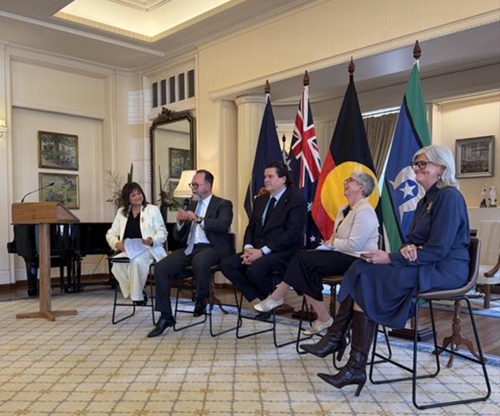
Pictured left to right: Workplace Gender Equality Agency CEO Christine Castley, Laing O'Rourke Managing Director - Australia Mark Dimmock, Australian Industry Group Chief Executive Innes Willox, Australia's Ambassador for Gender Equality Michelle O'Byrne, and Her Excellency the Honourable Sam Mostyn AC, Governor-General of Australia.